Networking wins and fails: what actually opens doors
VP Team Live | Guest: Vasyl Dub
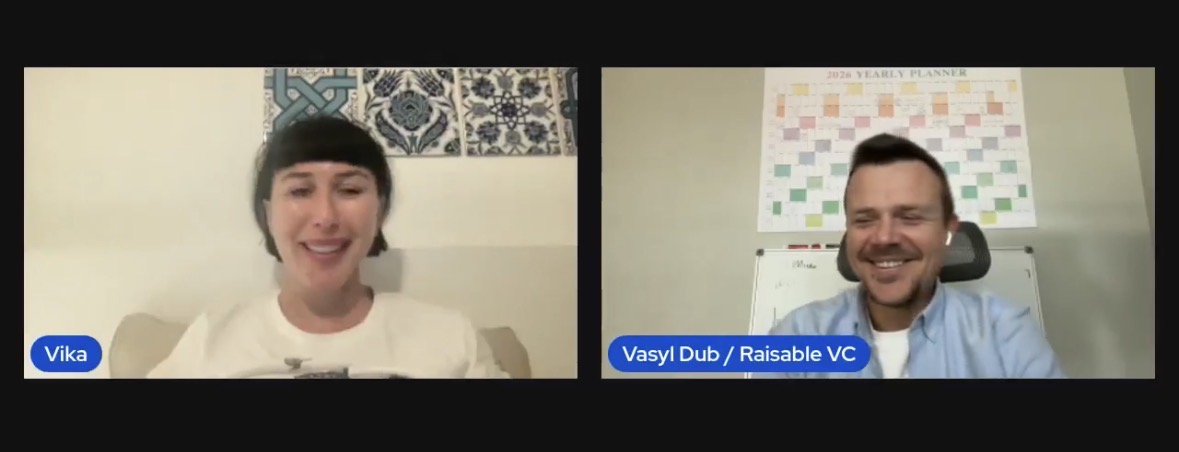
Watch the full session →The session was hosted by Vika Prydatko, founder of vpteam.io, with Vasyl Dub — founder of Raisable Founders Hub (200+ founders and investors from Silicon Valley), mentor, and lecturer in venture capital programs at Stanford University. They discussed how to build a network, common mistakes, and what actually gets you in the room.
Networking in Silicon Valley: how it really works
A smart person knows where they are, who they're talking to, and what the conversation is about. Access to the right people — a conference, LinkedIn, a meetup — means nothing on its own. What matters is understanding the context and knowing what you can offer.
The elevator pitch exists for a reason. In the Valley, you often meet the right person for just two minutes. If you know what to say, that creates a reason for the next, longer conversation.
How to start a conversation with a stranger
Vasyl approached a Sequoia GP at Stanford like this: he mentioned he had recently listened to the investor's interview, pulled out one specific line, and shared it with his own audience. The investor started asking who Vasyl was. The photo was taken by the Dean of Stanford Graduate School of Business.
The approach: give first — specifically, genuinely, without expectations. That opens the conversation better than any pitch.
Shared interests as a networking tool
Vasyl got into Stanford through cycling. He met a professor on charity rides of 100–200 km. On those rides, you talk about everything: entrepreneurs, trends, upcoming programs.
Vika met someone at a party through a T-shirt that read "introverted, but love to discuss cats." They later met again in the Valley.
Networking doesn't have to be work-related. The strongest connections often come from a shared interest, a sense of humor, or a common experience.
Common networking mistakes: real fails
Cold outreach without context. Vasyl once reached out cold about his project to a fintech investor — who turned out not to be an investor at all. An automated blast sent to the wrong person. Zero results.
Cutting someone off at an event. A woman approached who was supposed to sponsor the event. Vasyl didn't pause the conversation or introduce her. The right move: bring people together on the spot.
Showing up in the Valley unprepared. At regular conferences, visiting founders end up pitching other visiting founders. Meanwhile, investors are in closed meetings with 20–30 people.
How to talk to an investor without looking desperate
Don't open with a pitch. Small talk isn't a formality — it's a filter. If it doesn't flow, the working relationship probably won't either.
Ask the investor: what check sizes, which types of companies, how many deals per month, what's in focus. If you're not in their lane — say so, and ask them to introduce you to someone more relevant.
Investors also need to find founders. The money exists — the question is where to put it. You're solving the same problem from different sides.
How to exit a dead-end conversation at a networking event
Two options:
- "You're not the right person for what I'm working on — don't waste your time."
- "Great talking, but I need to catch one more person before they leave. Excuse me."
If someone isn't picking up on the signals — glance at your watch and be direct.
LinkedIn as a networking tool: what actually works
If you can't hook someone in one sentence, it's better to send a blank connection request. A well-built profile converts better than any cold message.
Your headline is the most important element. Every section should speak directly to the audience you're trying to reach.
If you're job hunting: follow target companies, find the hiring manager, and leave substantive comments on their posts. People notice who engages with their content.
Personal story as a point of connection
A difficult experience — illness, failure, a crisis — becomes a strong connection point once you've processed it and can tell it with a positive ending. Don't trade on negativity. Share it when it has become your strength.
Starting a network in the Valley from scratch
Find someone who can help you build warm introductions to the right people. Clarify your goals early — ideally with a mentor or coach.